
The Simulated Life
Why success doesn’t feel like success in a world that never slows down

“I had everything that people usually associate with happiness: success, wealth, recognition, family. And yet the question kept arising: What will come of what I am doing today or tomorrow? What will come of my whole life? I felt that what I had been standing on had collapsed, and that I had nothing left under my feet”
- Tolstoy in ‘My Confession’.

Image by Lauren Greenfield's extensive project Generation Wealth documenting the global aspiration for affluence.
It may be one of our greatest human tragedies that we spend so much of our lives sacrificing family dinners, friendships that don’t fit the calendar, long hours in nature, pouring years of sweat and attention into our work, only to arrive later with more success, more capability, more security, and still feel that something essential has gone missing.
The promotion landed. The book published. Or just imagine selling your company for billions, like Vinay Hiremath, the co-founder of Loom, only to write a viral post saying, “I am rich and I have no idea what to do with my life.”
On paper, the life worked. And yet, it never felt that way from the inside.
Success fails because it arrives too fast to be felt, not because it disappoints. Tolstoy noticed this early. In My Confession, after War and Peace and Anna Karenina, after wealth, status, and recognition were secured, he found himself strangely at odds with his own success. When his writing finally slowed, something unsettling surfaced. He described it as standing on ground that had quietly given way beneath him, the realization that the life he had built no longer felt real.
This is the moment where people often turn inward, often searching for a diagnosis. They assume something is wrong with them, that they’re ungrateful, privileged, lost, burned out, miswired … but what’s happening here isn’t just psychological. It’s structural.
The Simulated Self
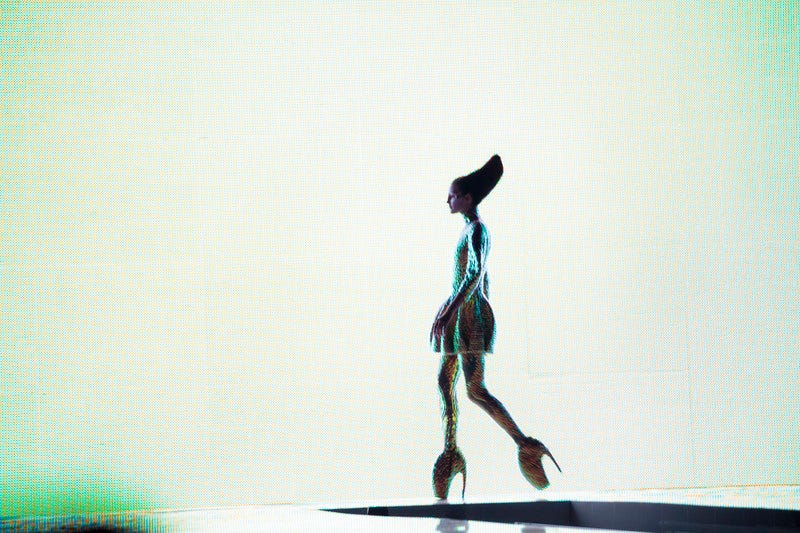
Image by Lauren Greenfield’s Generation Wealth
For most of human history, life moved slowly enough to close its own loops. What you did, what you felt, and what happened next were tightly bound. Actions carried visible consequences. The body, the mind, and the environment stayed in connection. You worked until your body was tired. You rested until you felt restored. You built something with your hands and had to live with what you made. The harvest either came or it failed. Feedback arrived quickly. You felt the cost immediately. You felt the change directly.
More importantly, human intelligence wasn’t abstract … it was embodied. Feedback arrived quickly. You felt the result of your actions in your body and in your life. In a recent podcast, Ilya mentioned that human intelligence was shaped by billions of feedback signals (tension, relief, danger, satisfaction) that continuously pull cognition back toward reality. For decades, rationalist thinking dismissed bodily signals as a distraction from “real” thought. Neuroscience tells a different story: the body isn’t interrupting thought. It’s actually completing it. In a very efficient way.
But over the last two centuries, our modern work culture have broken that loop. Life has been reorganized around speed, scale, abstraction. Output outruns integration. Narratives move faster than experience. Decisions are rewarded for confidence, not for depth. The world no longer waits for the body to catch up.
We feel this break in everyday life. A tightness in your chest after a meeting. A shallow breath during an interview. The body registers something before the mind has words for it. But there’s no time. Another call starts. Another message demands a response. Another deadline approaches. So the signal gets overridden. You’ve learned that stopping to listen means falling behind, and the sensation never completes its loop. You keep moving.
Sometimes it shows up in decisions that look right on paper. You can explain them cleanly, defend the logic, even sharpen the argument with a model. The narrative is tight. The certainty is convincing. But the decision sits one layer above reality. It hasn’t passed through the body yet, and the gap goes unnoticed because there’s always something else to explain, another story to tell, another version to make coherent for the next meeting, the next stakeholder, the next review.
Over time, the lesson becomes clear. If you want to function here in this world, you have to move quickly and explain yourself well. Don’t pause. Don’t hesitate. Don’t wait for integration. This is how you remain legible. Employable. Relevant. In motion. And slowly … without quite noticing when it happened .. you create a layer above reality. A simulated version of yourself.
What’s striking is when this realization tends to arrive. Not during struggle. Not during doubt. But after success. After the metrics are met. When there’s nothing left to chase without repeating yourself. Some people run fast enough to reach what looks like “winning in life” (status, wealth, validation) and discover something unsettling waiting there: the body never caught up. They never closed the loop.
And the majority never stops running at all. We all stay suspended in the promise of the next promotion, the next milestone, the next version of life where things will finally feel complete. Different paths, same condition. Motion keeps the questions at bay.
Why does this matter now?
Because acceleration has quietly removed the last remaining pauses. What once closed the loop … fatigue, limits, boredom, the simple passage of time …no longer does. The news cycle moves faster than we can absorb. New tools arrive before we’ve lived with the old ones. The infrastructure of modern life keeps us in motion, and speed is no longer our advantage.
What once took years, not because we were inefficient, but because our own biology, can now be produced instantly. We sound decisive, visionary, coherent without yet believing what we’re saying. Performance races ahead of experience.
With AI, this gap widens. Simulation becomes cheaper. Appearing knowledgeable costs almost nothing. When everyone can narrate insight, insight loses weight. When everyone can move fast, speed stops meaning anything.
So we respond the only way the system rewards: more activity to stay relevant, more signaling to stand out, more narration to justify our place. This isn’t laziness. It’s hyper-performance. We work harder, faster, louder while feeling increasingly disconnected from what any of it is actually for.
This is why burnout rises even as productivity tools improve. Why leadership feels disconnected despite endless “thought leadership.” Why people feel replaceable while being impossibly busy.
What is increasing is the gap between what you can produce and what you’ve actually lived. Between the confidence you can project and the uncertainty you still carry. The simulation layer grows not because of AI alone, but because we learned, long ago, to ignore what makes us human.
Some imagine this trajectory as progress. A future of total simulation feels like the natural continuation of a path we’ve already been walking. When work, value, and intelligence are defined primarily through abstraction (language, metrics, representations) it becomes intuitive to treat lived experience as friction. If cognition is what matters most, then simulating reality begins to look more efficient than inhabiting it.
But there is another path. Not human versus machine, but simulation versus human integration. Motion versus grounding. AI will accelerate this moment not by failing, but by succeeding too well. It will generate more insight, more strategy, more vision than any human nervous system can absorb. Competing on those terms only deepens the gap.
The alternative is to ask:
Not: How do I keep up?
But: What if I stopped?
Just long enough for the body to catch up. Long enough to feel what hasn’t been felt. Long enough to care about consequences before moving on.
Because here’s what we have forgotten: success is not a belief. Not approval we receive from others. Not a story we tell ourselves. It’s a bodily state. You don’t think your way into it. You feel your way into it. And feeling, real feeling, is not softness or intuition-as-vibe. It is compressed biological intelligence, shaped by consequence over evolutionary time.
The system’s oldest signal. The one that knows when something fits reality and when it doesn’t. That kind of knowing cannot be rushed. It requires time. Contact. Agency.
It requires stepping out of simulation …
and finally, landing.
holy heck; i'm halfway through and stunned by your writing. impeccable werk.
What a beautiful piece, Gil!! I've been feeling this too lately. I find myself now wanting to run in the other direction and to just stop. Only I find the stopping, even a pause, almost feels unnatural now...